 Pictures
and Text: ENDANGERED
SPECIES OF NE NSW
and
Pictures
and Text: ENDANGERED
SPECIES OF NE NSW
and
EIGHT
EXTINCT AUSTRALIAN SPECIES
The Endangered Species Project is raising awareness and sympathy for endangered species in the run-up to the NSW state elections next March.
, 
Using Koala, Masked Owl, Yellow-bellied Glider and Tiger Quoll as examples, the Rainforest Information Centre and friends hope to convince NSW decision-makers to protect sufficient habitat to allow endangered forest and woodland species to avoid extinction.
With the help of master costume-maker Dale Woodward and Textile and Design students from Wollongbar College of TAFE, we have fabulous costumes for these creatures to visit schools, hospitals, festivals, shopping malls etc and to make a video about their plight.
Australia has an abysmal record on species extinction. More mammals have become extinct in Australia over the last 200 years than in any other country in the world. Many other species which live in our forests and woodlands are now in severe decline. This is particularly the case with most of the 300 Australian animals and birds that use tree hollows to nest and find shelter. Hollows only form in trees older than 120 years. Destruction of habitat and old trees has to stop if we want these species to survive. The Threatened Species Conservation Act 1995 lists 80 animal and 300 plant species in danger of extinction in NSW.
HABITAT REQUIREMENTS
In some areas we now have very clear scientific information about how to protect endangered species. This is the case in North-east NSW. In 1998, expert panels of scientists commissioned by the NSW and Federal Governments identified the minimum area of habitat that must be protected so that populations of threatened animals could survive. For example they recommended inclusion of sufficient habitat in reserves for;
At least 4,000 hectares of undisturbed contiguous forest should be protected for each Koala population to ensure that a minimum population of at least 500 individuals is maintained. Corridors are required to link smaller isolated populations to bigger populations to prevent local extinctions. There has not been sufficient habitat protected to meet these requirements
In other areas, such as western NSW, there is less scientific information currently available although it is well known that temperate woodlands are one of the most endangered ecosystems in Australia. There is less than 8% of their original distribution remaining. It is obvious that large woodland reserves are urgently required to protect endangered species.
Extinction rates are some of the highest in Australia, mammal and bird species are experiencing severe declines and once common species are now rapidly disappearing. It is obvious that large reserves are required immediately to protect endangered woodland species.
Urgent changes are required to stop ecosystem destruction in NSW. The Endangered Species Project is calling on the NSW Government to protect additional areas of forest and woodland in National Parks to avoid the extinction of the Masked Owl, Yellow-bellied Glider, Spotted-tail Quoll, Koala and other endangered species.
Now we know what has to be done to avoid species extinctions. Only the political will is missing. We must change that.
WHAT YOU CAN DO
* Sign a petition to the NSW Parliament. This petition can be found at
www.rainforestinfo.org.au/spp/petition.htm
* Collect other signatures for the petition. Print copies from the website and circulate among your friends and acquaintances.
* Write, fax or email Bob Carr: c/- Parliament House, Sydney 2000, fax 02 9228 3933, bob.carr@www.nsw.gov.au
* Host a video screening and invite your friends. Send us your address and $5 and we will send you a copy of our video when it is completed in December.
* Donate to the Endangered Species Project. Donations over $5 are tax
deductible by sending them to Rainforest Information Centre
PO Box 368 Lismore, NSW 2480
Johnseed1@ozemail.com.au
02 66213294
NSW ENDANGERED SPECIES PROFILES
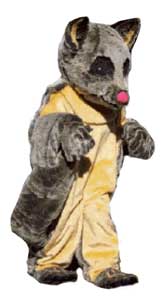
Yellow-bellied Gliders are the world’s most vocal marsupial. Restricted to tall, mature eucalypt forests in temperate to subtropical eastern Australia in regions of high rainfall, their diet consists of sap (80%), nectar, honeydew, manna and insects. The most proficient glider in Australia, they can cover 144 metres in one bound. In the absence of trees, the species is unable to disperse among patches of suitable habitat. The Yellow-bellied Glider is very sensitive to disturbance, often vacating an area when logging first begins and making little use of young forest even where scattered old trees, apparently suitable for nest and den sites, are available.
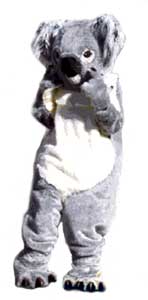
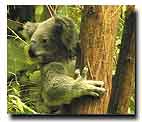
Koalas spend most of the day sleeping, and are active
in the evening. They very rarely drink water, as they get all the liquid they need from
eucalyptus leaves, their exclusive diet. They usually only have one young, weighing less
than half a gram when born. Young Koalas have a pouch life of 5-7 months, feeding on milk
or predigested leaves and leaving the pouch after seven months to be carried about on the
mother's back. By 11 months of age the young is independent. Koalas may live over 10 years
in the wild. Due to commercial logging and clearing of bushland, Koala populations have
been declining rapidly in NSW.
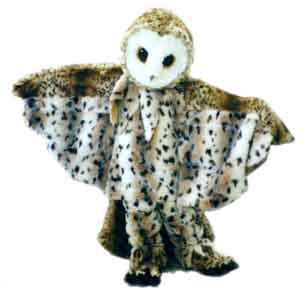
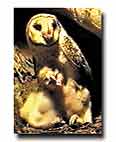
Masked Owls are amongst the largest and most powerful owls in Australia. Secretive, relatively silent and strictly nocturnal, they mainly hunt small mammals. They mate for life. The male prepares the nest in a tree hollow with decaying debris, preferring the big hollows of trees, usually at a considerable height. Females lay two or three pearly-white, oval-shaped eggs. She stays in the nest initially with the male ferrying food to her and the chicks. The young are covered in white down, then a creamy down and are able to fly at about three months.
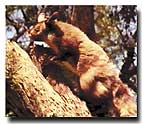
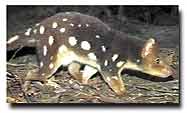
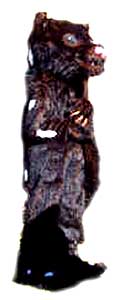 Spotted-tailed Quolls, also known as Tiger Quolls,
are the second largest of the world's carnivorous marsupials. They are brown
with white spots on the body and tail with a moist pink nose, pointy ears and
a lot of sharp teeth. They are solitary, nocturnal animals, very agile both
up in the trees and on the forest floor. Primarily predators, Spotted Tailed
Quolls hunt other animals such as rats, birds, frogs, possums, reptiles, insects,
rabbits, mice etc. A Spotted-tailed Quoll can bring down a wallaby three times
its size. Sexual maturity is reached at one year with a life expectancy of around
6 years. Land clearance and logging have removed or degraded much of their habitat.
Spotted-tailed Quolls, also known as Tiger Quolls,
are the second largest of the world's carnivorous marsupials. They are brown
with white spots on the body and tail with a moist pink nose, pointy ears and
a lot of sharp teeth. They are solitary, nocturnal animals, very agile both
up in the trees and on the forest floor. Primarily predators, Spotted Tailed
Quolls hunt other animals such as rats, birds, frogs, possums, reptiles, insects,
rabbits, mice etc. A Spotted-tailed Quoll can bring down a wallaby three times
its size. Sexual maturity is reached at one year with a life expectancy of around
6 years. Land clearance and logging have removed or degraded much of their habitat.
EXTINCTION? YOU CHOOSE
It's not just for the beauty and value of these creatures
that we have to
protect the forests and woodlands:
Forests are the lungs of our planet, they maintain the stability of
climate.
Forests protect our water catchments ensuring clean drinking water as well
as protection from floods and droughts.
Forests contain the genepool that holds the foods and medicines and
industrial products of the future.
Let's work together to keep them alive. Let's protect the forests and their
inhabitants for our children.".